
ISRO
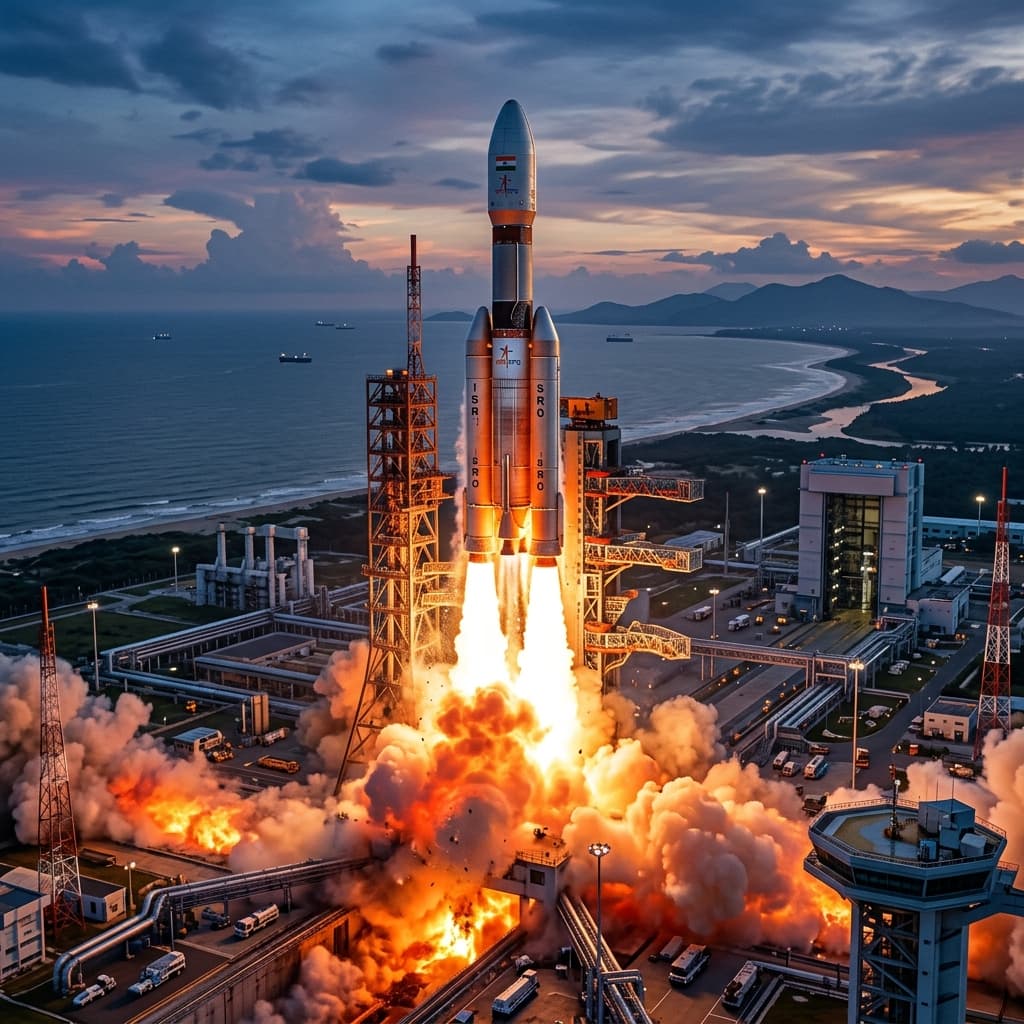
The Indian Space Research Organisation. Masters of high-efficiency, low-cost space exploration.
Planetary / Mission Telemetry
Historical Context
The Past
Founded in 1969 by Dr. Vikram Sarabhai, the Indian Space Research Organisation (ISRO) was built on the philosophy that space technology should be used for the direct benefit of society, initially focusing on communication and weather satellites for agriculture and education. For decades, ISRO operated on a shoestring budget compared to its Western counterparts, forcing its engineers to innovate and develop remarkably cost-effective and highly reliable launch vehicles like the PSLV (Polar Satellite Launch Vehicle). ISRO shocked the world in 2014 with the Mangalyaan (Mars Orbiter Mission). India became the very first nation in history to successfully place a spacecraft into Martian orbit on its absolute first attempt, and it did so at a cost of just $74 million—less than the budget of the Hollywood movie 'Gravity'.
Live Status
The Present
ISRO has rapidly ascended to the top tier of global space agencies. In August 2023, ISRO made global history with the Chandrayaan-3 mission. The Vikram lander successfully touched down near the rugged, heavily cratered, and extremely hazardous Lunar South Pole—becoming the first nation ever to do so. The Pragyan rover deployed from the lander and conducted crucial in-situ chemical analyses of the lunar soil, confirming the presence of sulfur and oxygen in the region where massive water ice deposits are suspected to exist. Concurrently, ISRO successfully launched Aditya-L1, India's first dedicated solar observatory, which is currently stationed at the Lagrange 1 point to continuously study the Sun's violent coronal mass ejections.
Future Trajectory
Next Steps
The future of ISRO is focused on the highly anticipated Gaganyaan program, which will fundamentally elevate India's status to a major space superpower. Gaganyaan aims to launch a crew of three Indian astronauts (Vyomanauts) into a 400 km Low Earth Orbit for a three-day mission using an indigenously developed orbital module and a human-rated LVM3 rocket. Beyond human spaceflight, ISRO is developing the Shukrayaan-1 orbiter to study the toxic atmosphere and surface topography of Venus. Furthermore, ISRO is collaborating heavily with NASA on the NISAR (NASA-ISRO Synthetic Aperture Radar) mission, a massive, highly advanced Earth-observing satellite that will map the entire globe every 12 days to track climate change, ice-sheet collapses, and tectonic shifts.